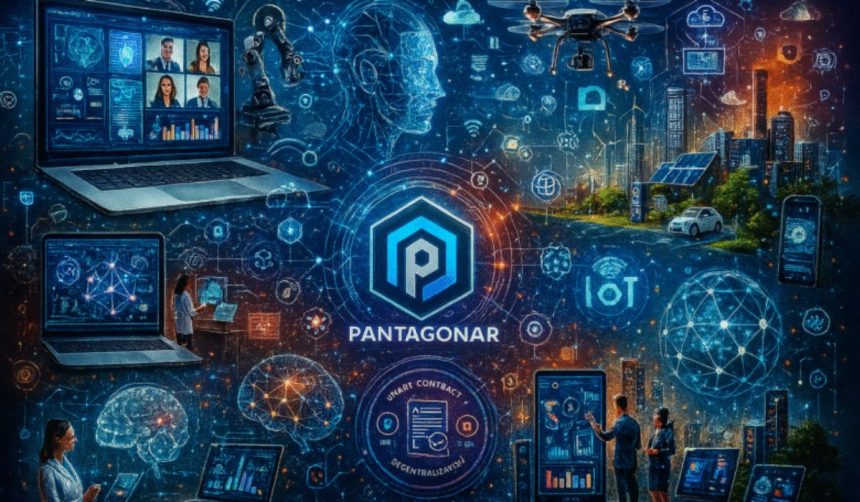
Have you ever come across a word that seems unfamiliar at first, yet feels oddly important the more you think about it? That’s exactly how many people react when they encounter pantagonar. It doesn’t scream for attention, but once you start exploring its layers, you realize it touches technology, culture, innovation, and even how we make decisions in everyday life.
This article is written for the general public—no technical background required. Think of it as a guided walk rather than a lecture. We’ll unpack the idea step by step, using simple language, relatable examples, and clear explanations. By the end, you won’t just understand it—you’ll see why people are talking about it.
What Is Pantagonar, Really?
At its core, pantagonar can be understood as a multi-dimensional framework rather than a single product or tool. It represents a way of connecting systems, ideas, or processes so they work together instead of in isolation.
Imagine a city where roads, traffic lights, public transport, and pedestrians all move independently with no coordination. Chaos, right? Now imagine everything synced smoothly. That harmony is the essence of this concept.
It’s not limited to one industry. Instead, it shows up wherever integration, balance, and adaptability are needed.
Why Is Everyone Suddenly Talking About It?
You might wonder, why now? The reason is simple: the world has become more interconnected than ever before.
- Businesses rely on multiple digital systems
- Individuals juggle work, life, and technology
- Communities depend on shared platforms
Older models focused on single solutions. Modern challenges demand holistic thinking. That’s where this idea fits in perfectly—it reflects the shift from siloed thinking to connected ecosystems.
The Origin and Evolution of the Idea
Every meaningful concept has a backstory. Pantagonar didn’t appear overnight. It evolved as a response to fragmentation—whether in technology, workflows, or communication.
Initially, it was discussed in niche circles focused on optimization and coordination. Over time, its relevance expanded as people realized the same principles apply to education, governance, creative industries, and even personal productivity.
Think of it like electricity: first a curiosity, then a necessity.
Key Principles That Define Pantagonar
To truly understand it, let’s break it down into its core principles:
Integration Over Isolation
Instead of separate parts working alone, everything is designed to communicate and cooperate.
Adaptability
Systems must evolve with changing conditions rather than resist them.
Efficiency With Purpose
Speed and automation matter, but not at the cost of meaning or ethics.
Human-Centered Design
Despite its modern feel, people remain at the center of decision-making.
These principles make it flexible enough to apply across different fields.
How Pantagonar Shows Up in Everyday Life
You may already be interacting with this concept without realizing it.
- A smart home that connects lighting, security, and energy use
- A workplace platform combining communication, planning, and analytics
- A learning environment blending digital tools with human mentorship
It’s like an orchestra: each instrument matters, but the music only works when they play together.
Its Role in Modern Technology
Technology is one of the strongest areas where this framework thrives. Instead of building standalone applications, developers now focus on interoperability.
This approach helps reduce redundancy, improves user experience, and allows systems to scale more effectively. Rather than reinventing the wheel each time, components are reused and refined.
The result? Less friction and more flow.
Impact on Businesses and Organizations
For companies, pantagonar thinking can be a game-changer.
- Decision-making becomes clearer because data flows freely
- Operations become leaner through coordinated processes
- Customer experience improves thanks to consistency
Businesses that adopt this mindset often feel more agile, especially during uncertain times. It’s not about being bigger—it’s about being smarter.
Cultural and Social Influence
Beyond systems and software, this concept also shapes how societies function. Communities today rely on shared digital spaces, collaborative efforts, and mutual understanding.
By encouraging interconnectedness, pantagonar supports inclusivity and collective problem-solving. It nudges people away from “every person for themselves” thinking and toward shared responsibility.
In a divided world, that matters.
Common Misunderstandings Explained
Because it sounds abstract, misconceptions are common. Let’s clear a few up:
- It’s not a single app or product
- It doesn’t replace creativity—it enhances it
- It’s not overly technical—it’s more philosophical than mechanical
Think of it as a lens, not a machine. A way to view problems differently.
Challenges and Limitations to Consider
No idea is perfect. This approach also comes with challenges:
- Over-integration can lead to complexity
- Poor planning may create dependency issues
- Ethical concerns arise when automation overtakes human judgment
The key is balance. Like seasoning in food, too little does nothing, too much ruins the dish.
The Future Outlook: Where Is This Headed?
Looking ahead, pantagonar-style thinking is likely to expand further. As artificial intelligence, digital governance, and remote collaboration grow, the need for coordinated systems will only increase.
The future isn’t about isolated brilliance—it’s about connected intelligence.
Why the General Public Should Care
You don’t need to be a technologist or executive to benefit from understanding this idea. It affects:
- How services are delivered
- How information is shared
- How choices are presented
Awareness empowers you to ask better questions and make informed decisions. And that’s something everyone can use.
Conclusion: Bringing It All Together
Pantagonar is best understood as a mindset—one that values connection, balance, and thoughtful integration. In a world that often feels scattered, it offers a way to create harmony without forcing uniformity.
Like a bridge connecting separate islands, it helps ideas, systems, and people meet in the middle. And while it may not always be visible, its influence is quietly shaping how the modern world works.
Frequently Asked Questions
What does pantagonar mainly focus on?
It focuses on integration, coordination, and balance across systems, ideas, or processes.
Is pantagonar limited to technology-related fields?
No, it applies to business, education, social structures, and even personal productivity.
Does this concept replace existing systems?
Not necessarily. It often improves or connects what already exists.
Is pantagonar difficult for beginners to understand?
Not at all. Its principles are intuitive once explained in simple terms.
Why is pantagonar becoming more relevant today?
Because modern challenges require connected solutions rather than isolated ones.